BriefToFloor
An AI assistant for event venues: an enquiry email comes in, the room setup is drafted, laid out in 3D and priced, and every fix the coordinator makes becomes training data for a small model the venue owns.
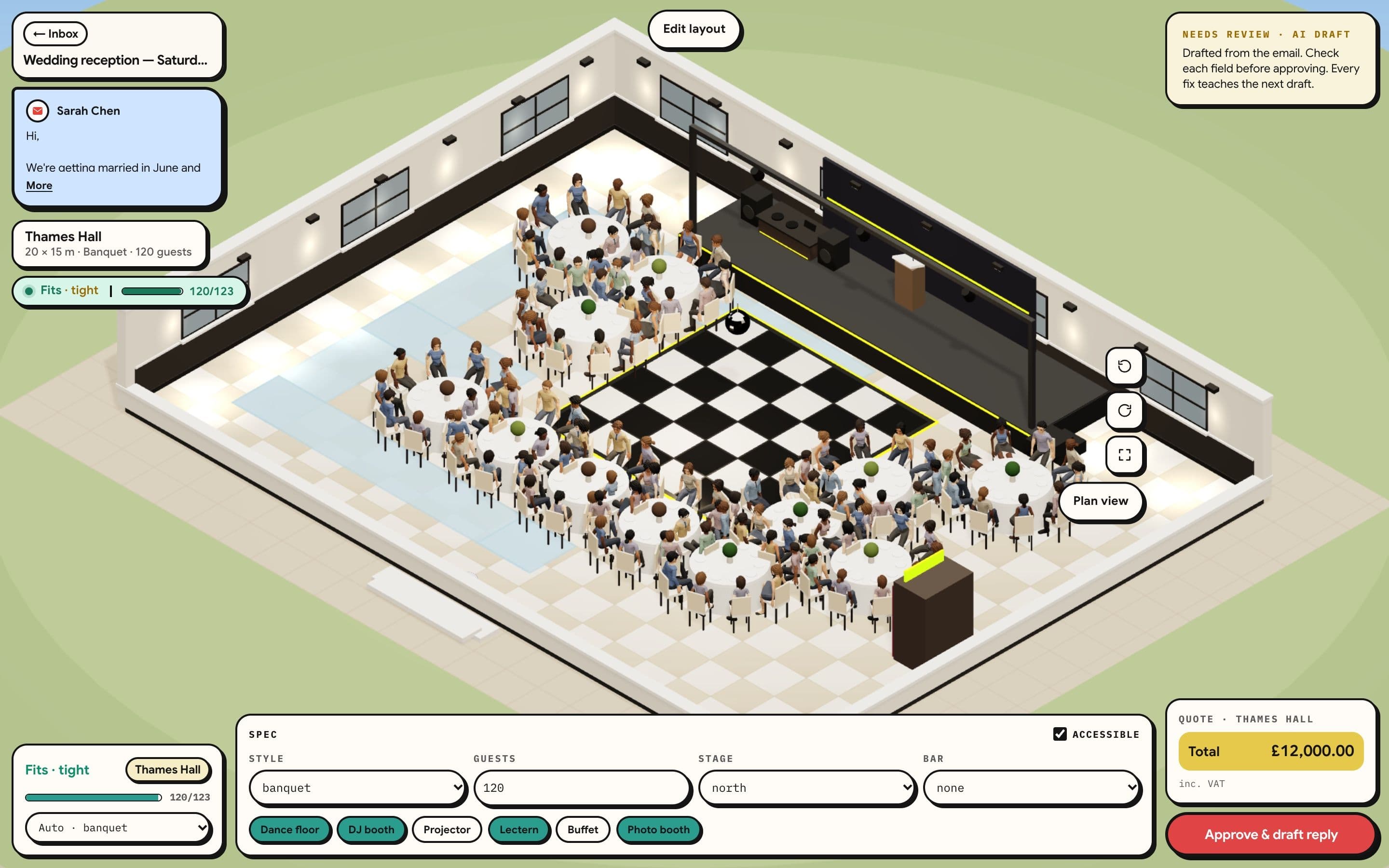
Venues get event enquiries all day, and before anyone can reply, a coordinator has to read the email, work out the room setup, check it fits, sketch a layout and price it. The venue that replies first with a clear offer often wins the booking.
The hard part is reading the email. Clients write "the captain hands out the trophies" or "my nan uses a walker", not "cabaret, stage north, accessible", and every venue has its own conventions on top. Built at Night Shift, the Mubit hackathon in London, as a team of two.
The product has exactly one AI call: an enquiry goes in, a short JSON setup comes out. Everything after that (room choice, table layout, quote, reply and the 3D hall) is plain, unit-tested TypeScript. That gave Mubit one clean, repetitive task to train a small open model on.
I built the correction loop. When a coordinator fixes a field, the fix is stored with the original email, and the most relevant past fixes go into later prompts as short notes, so the model learns the venue's house rules without them ever being written into the prompt. When a corrected enquiry is approved, waiting enquiries with the same cue are re-read with the fix applied. I also wrote the house-rule data, the held-out eval harness and the organiser's enquiry and proposal flow.
Gallery.
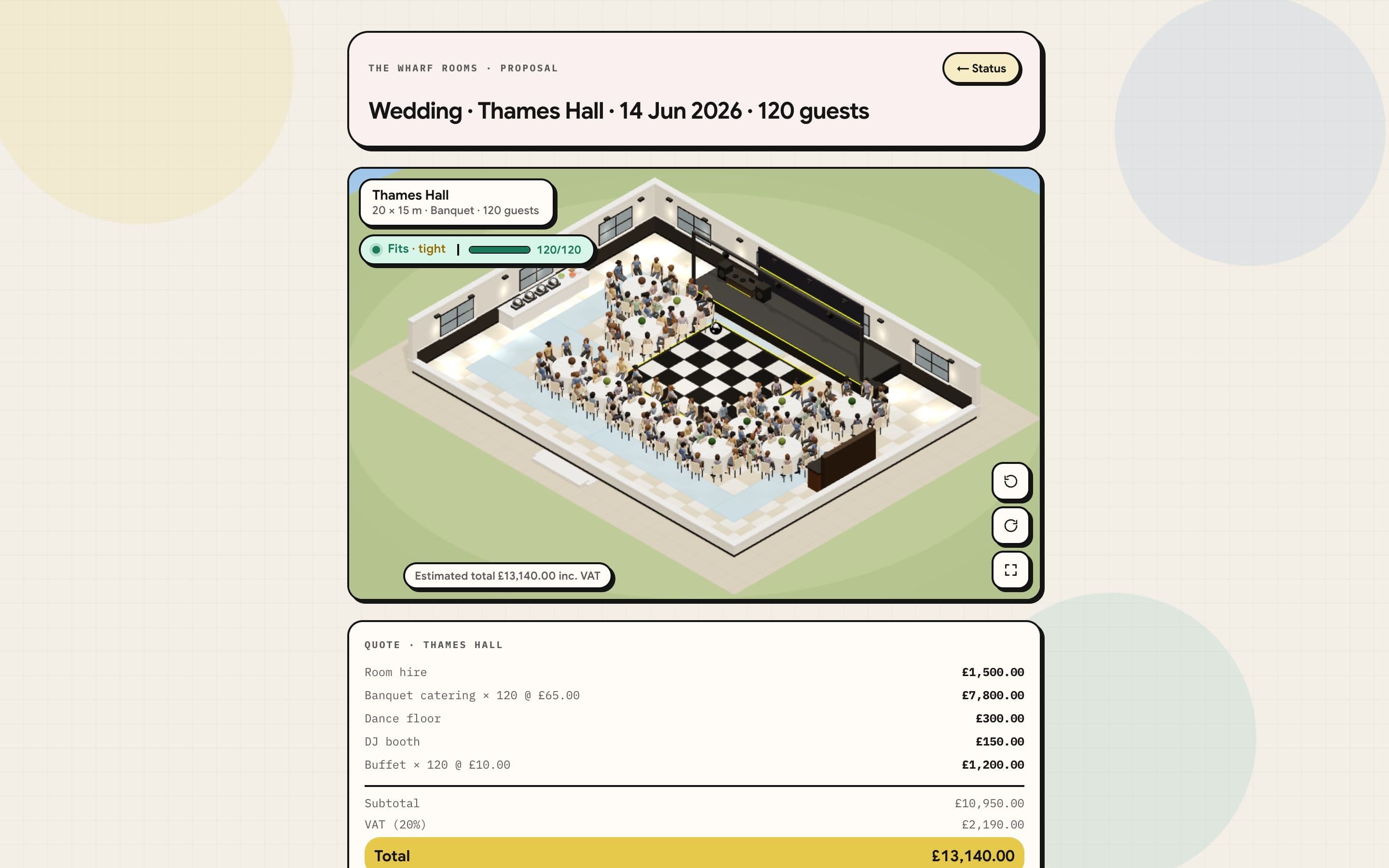
The organiser’s proposal page 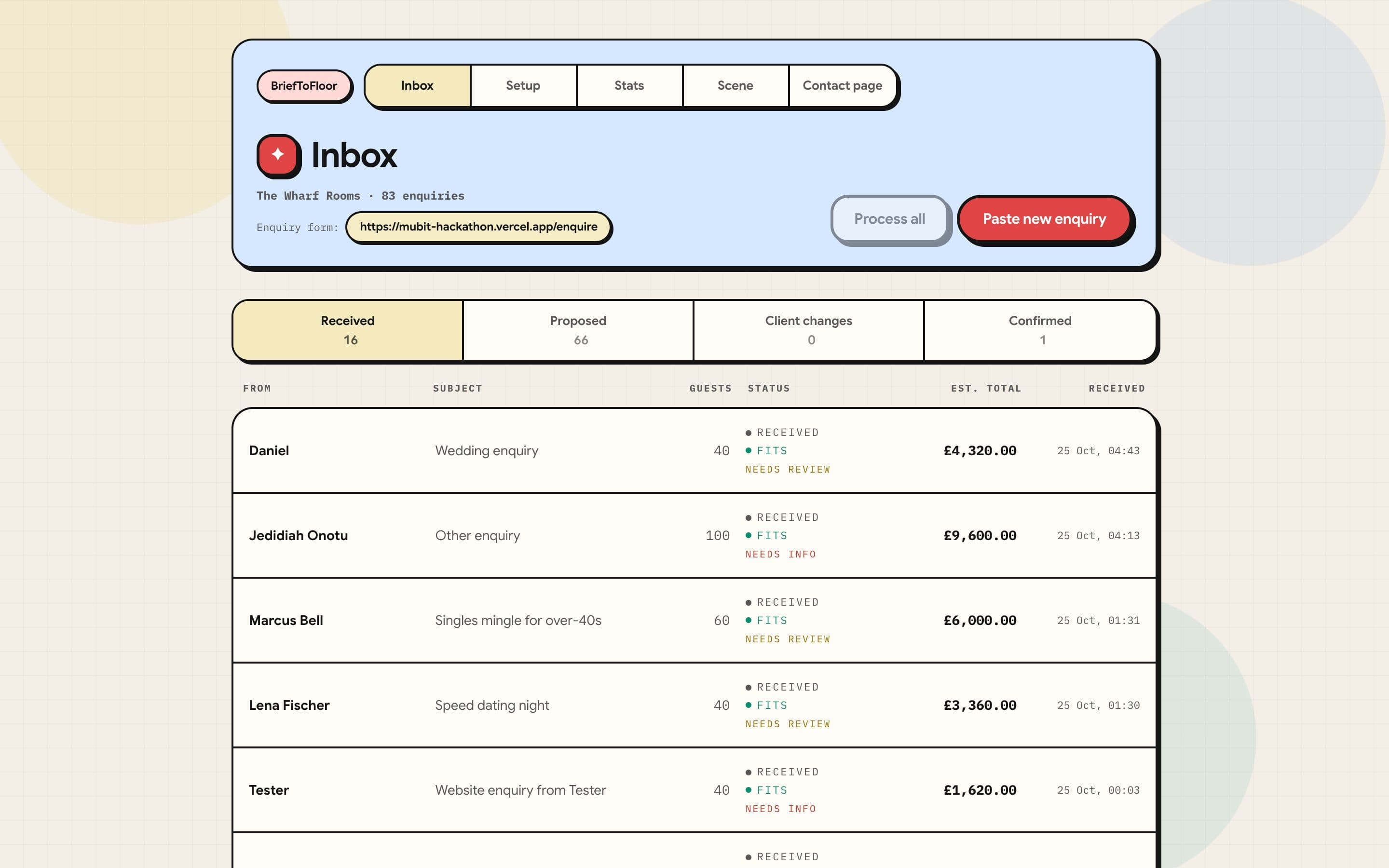
Every enquiry is read and priced before the coordinator opens it 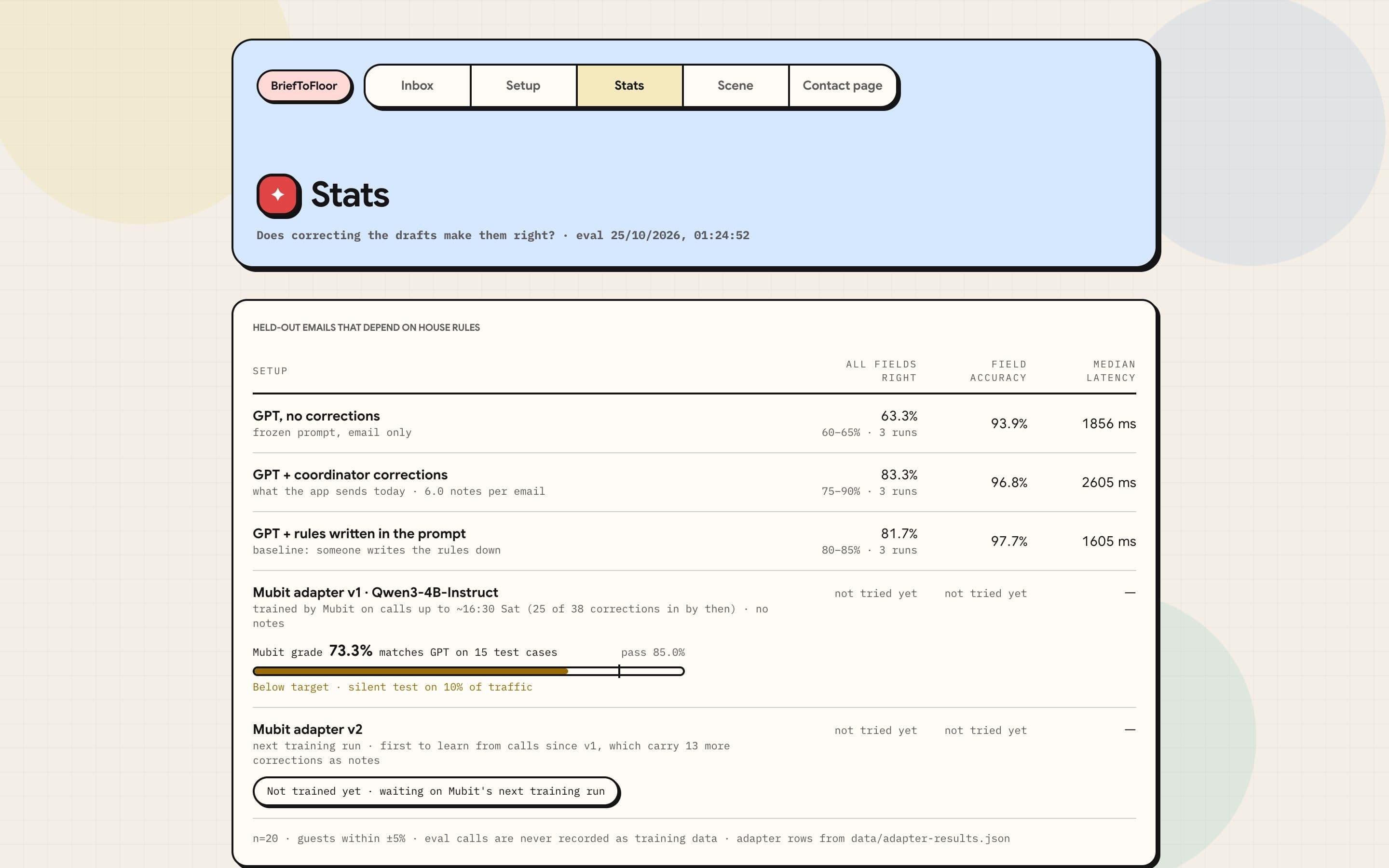
Held-out eval: corrections take fully correct answers from 63% to 83%
On 20 held-out enquiries, coordinator corrections took fully correct answers from 63% to 83%, level with writing the house rules into the prompt by hand (82%).
Mubit trained a 4B-parameter adapter on the task during the weekend. On real enquiries it matched the provider model on every field that decides the room, at about twice the speed.